



The Role of Digital Marketing in Legal Firms: A Complete Guide for 2026
Clients searching for lawyers no longer flip through phone books or wait for referrals. They go online first. Googling symptoms, reading reviews, and comparing firms in minutes. Digital marketing has become essential for law firms of all sizes. It helps them get found, build trust, and turn searches into consultations.
Whether you run a solo practice in Texas, a mid-sized firm in London, or a global corporate team in New York and Singapore, a smart digital strategy levels the playing field. It lets smaller firms compete with big names and helps everyone reach the right clients at the right time.
Why Digital Marketing Matters More Than Ever for Law Firms
People start their legal search online. Over one-third of potential clients begin there, and most check a firm’s website before calling. Firms that show up in searches win the business. Those that don’t get skipped.
Key benefits include:
- Wider reach: Connect with people beyond your local network, including international clients for cross-border issues.
- Level playing field: Small firms can outrank larger ones with better content and targeting.
- Better client targeting: Reach people actively searching for “divorce lawyer near me” or “immigration attorney [city].”
- Trackable results: See exactly which efforts bring leads and adjust quickly.
- Build trust 24/7: Share helpful information that positions your attorneys as experts.
State bar rules and advertising ethics add extra layers. Worldwide, firms deal with GDPR in Europe, varying privacy laws in Asia, and local regulations everywhere. Getting it right means more cases and fewer compliance headaches.
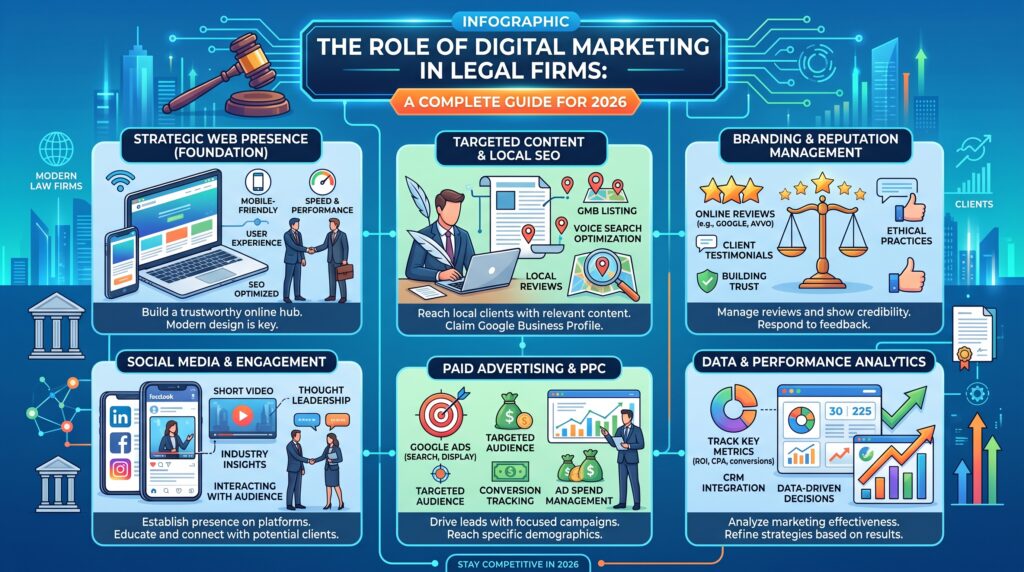
Core Components of Effective Law Firm Digital Marketing
A strong strategy combines several pieces that work together.
1. A High-Converting Website
Your website is your digital headquarters. It must load fast on mobile, clearly list practice areas, feature attorney bios with real results (ethically presented), include strong calls-to-action, and make contact easy. Add chatbots for instant answers and clear intake forms. Clients often decide in seconds whether to reach out.
2. Search Engine Optimization (SEO)
SEO helps you rank for terms people actually search. Local SEO is huge in optimizing your Google Business Profile, which can put you in the map pack that gets the most clicks. Worldwide, focus on both global keywords and country-specific ones. Content like blog posts answering common questions (“What to do after a car accident in California”) builds authority over time.
3. Pay-Per-Click (PPC) Advertising
PPC, especially Google Ads, delivers fast leads. You only pay when someone clicks. It works well for competitive areas like personal injury or family law. Expect high costs per click, so target precisely with location, timing, and exact-match keywords. Track everything to keep ROI positive.
4. Content Marketing
Create helpful, plain-language content and blog posts, guides, videos, and infographics. This builds trust and supports SEO. Examples include “5 Common Estate Planning Mistakes” or client success stories (with permission and no guarantees). Video content performs especially well on YouTube and social platforms.
5. Social Media Marketing
LinkedIn suits corporate and B2B work. Facebook and Instagram reach individuals for family or personal injury cases. TikTok and short videos work for younger audiences. Share tips, firm news, and behind-the-scenes glimpses to humanize your team. Focus on value, not sales pitches.
6. Email Marketing and Nurturing
Stay in touch with past clients and leads using newsletters with legal updates. Segment lists so messages feel relevant. Always respect privacy laws CAN-SPAM in the USA and GDPR elsewhere.
7. Online Reviews and Reputation Management
Encourage honest reviews on Google, Avvo, and other directories. Respond professionally to all feedback. Positive reviews heavily influence decisions.
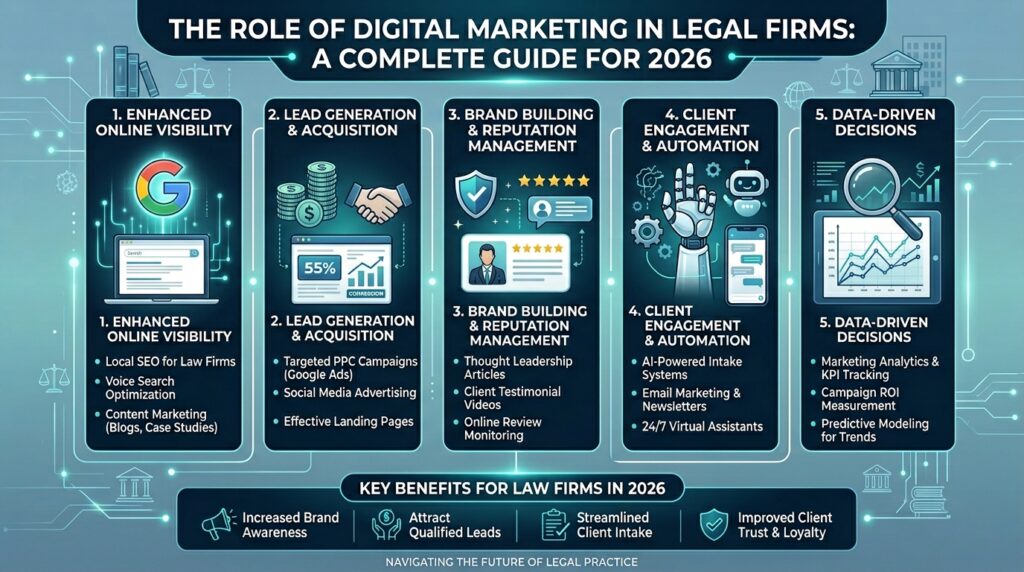
USA vs. Worldwide: Key Differences
In the United States, compliance with state bar advertising rules is critical. Avoid guarantees of results, misleading claims, or improper client solicitation. Many states require disclaimers. Local SEO and Google Business Profiles matter more because most clients hire locally.
Worldwide, firms face fragmented regulations. European firms prioritize GDPR for data handling. Multinational practices need consistent branding across regions while adapting messaging locally. Cross-border SEO and multilingual content become important for international arbitration, immigration, or corporate work. Cultural differences affect what content resonates humor that works in the US might fall flat elsewhere.
Many global firms use a hub-and-spoke model. A central strategy with local execution.
Trends Shaping Law Firm Digital Marketing in 2026
- AI and Generative Search: Optimize for AI summaries (GEO) as well as traditional Google results. Create clear, authoritative content that AI tools love to cite.
- Video and Short-Form Content: Clients want to see and hear attorneys explaining issues simply.
- Privacy-First Marketing: With stricter data rules, focus on consent and value.
- Integrated Analytics: Top firms track the full client journey from first click to signed retainer.
- Personalization: Use data ethically to tailor experiences.
Actionable Tips to Get Started or Improve
- Audit your current presence: Check your website on mobile, Google rankings for key terms, and review profiles.
- Define your ideal clients: Create personas for each practice area (age, pain points, search habits).
- Set a realistic budget: Many firms spend 4-8% of revenue on marketing, with larger ones investing more. Start small and scale what works.
- Focus on one or two practice areas first: Master those before expanding.
- Create a content calendar: Consistency beats perfection.
- Measure what matters: Track website traffic, lead sources, conversion rates, cost per lead, and client acquisition cost.
- Stay ethical: Review all content against your jurisdiction’s rules. Get bar opinions when in doubt. Use disclaimers where needed. Never share confidential information.
- Consider specialists: Many firms partner with legal marketing agencies familiar with bar rules and legal SEO.
Small firms might handle basics in-house and outsource SEO or ads. Larger firms often build internal teams plus agency support.
Common Challenges and How to Overcome Them
- High competition and costs: Especially in major US cities. Solution: Niche down and combine organic + paid.
- Time constraints: Attorneys are busy. Solution. Repurpose one webinar into blog posts, social clips, and emails.
- Ethics worries : Solution: Train your team and create an approval process.
- Measuring ROI : Solution: Use tools like Google Analytics, call tracking, and CRM integration.
Conclusion: Digital Marketing Is Now Table Stakes
Law firms that treat digital marketing as an afterthought lose ground every day. Those that embrace it thoughtfully while staying fully compliant build stronger brands, attract better clients, and grow more predictably.
Start where you are. Improve one area at a time. Focus on helping people first, and the cases will follow. The tools and channels will keep changing, but the core principle stays the same: Be visible, trustworthy, and easy to contact when someone needs you most.
FAQs
How much should a law firm spend on digital marketing?
It varies by size and goals. Many successful firms invest 4-8% of revenue, with a mix of SEO (long-term) and PPC (quicker results). Start smaller and scale based on results.
Is social media worth it for lawyers?
Yes, mainly for awareness and trust. It rarely drives direct leads alone but supports other channels. LinkedIn performs well for many practices.
How long does it take to see results from SEO?
Expect 6-12 months for meaningful organic traffic in competitive areas. PPC can deliver leads within days.
What are the biggest ethics risks in legal digital marketing?
Misleading claims, improper testimonials, guaranteeing results, and mishandling client data. Always include required disclaimers and review local rules.
Should my firm hire an agency or do it in-house?
Many successful firms use a hybrid approach. Agencies bring expertise in legal compliance and tools; in-house teams maintain control and culture. Choose partners who understand law firm marketing deeply.
Digital marketing done right isn’t about flashy tricks. It’s about showing up where clients look, answering their questions honestly, and making it simple to take the next step. Firms that master this win in 2026 and beyond.
