



How Artificial Intelligence Is Accelerating Scientific Discovery
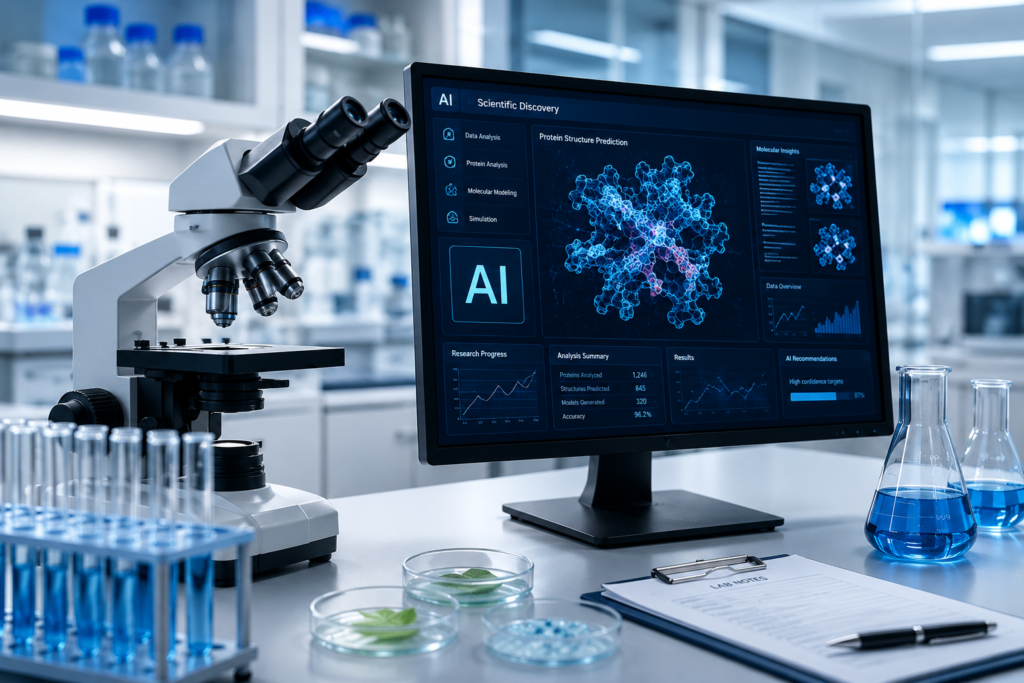
Artificial Intelligence is accelerating scientific discovery by helping researchers analyze enormous datasets, predict the behavior of complex systems, identify promising experiments, and automate repetitive laboratory work. It does not remove the need for scientists or physical testing. Instead, it reduces the time spent searching through possibilities so researchers can focus on the ideas most likely to produce useful results.
This shift is already visible in protein research, drug discovery, materials science, weather forecasting, genetics, astronomy, and automated laboratories. The most important development is not simply faster computing. It is the creation of a tighter research cycle in which AI generates predictions, experiments test them, and the resulting data improves the next prediction.
What Does Artificial Intelligence Do in Scientific Research?
Scientific research often follows a familiar process:
- Review existing knowledge.
- Form a hypothesis.
- Design an experiment.
- Collect and analyze data.
- Interpret the results.
- Revise the hypothesis and repeat.
Artificial Intelligence can support each stage. Machine-learning models can search scientific literature, detect patterns in experimental data, simulate possible outcomes, rank potential drug molecules, and recommend the next experiment.
The main advantage is scale. A research team may be able to study hundreds of possibilities manually, while a trained model can evaluate millions of molecular structures, material combinations, images, or measurements.
However, AI does not automatically determine which scientific questions are important. Researchers still define the problem, select the data, evaluate the model, run experiments, and decide whether the evidence supports a conclusion.
How AI Accelerates the Discovery Process
| Scientific task | Traditional challenge | How AI helps |
|---|---|---|
| Literature review | Too many papers to read manually | Organizes studies and identifies related findings |
| Pattern detection | Important signals may be hidden in large datasets | Finds correlations and unusual observations |
| Prediction | Physical testing can be slow or expensive | Ranks candidates before laboratory testing |
| Experiment design | Too many possible variables | Suggests the most informative next experiment |
| Data analysis | Images and measurements require extensive review | Automates classification and measurement |
| Repetition | Researchers must repeatedly adjust experiments | Closed-loop systems can learn from each result |
The greatest improvement occurs when these abilities are connected. AI becomes more useful when it does not merely make one prediction but helps researchers move continuously between prediction, testing, and refinement.
1. Predicting Protein Structures

Proteins perform many of the essential tasks inside living organisms. Their functions depend heavily on their three-dimensional shapes, but determining those shapes experimentally can require specialized equipment and lengthy laboratory work.
AlphaFold demonstrated that deep learning could predict many protein structures from their amino-acid sequences with a major improvement over earlier computational methods. The published AlphaFold research in Nature explains how the system combines evolutionary, geometric, and physical information to predict the positions of atoms within a protein.
Researchers can use predicted structures to:
- Investigate how proteins may function.
- Identify possible drug-binding locations.
- Compare proteins from different organisms.
- Study proteins that are difficult to isolate.
- Prioritize structures for experimental testing.
Newer models can also estimate interactions between proteins, DNA, RNA, ions, and small molecules. This is especially useful because biological activity often depends on how multiple molecules interact rather than on one protein viewed in isolation.
The common misconception is that protein folding has been completely solved. AI usually provides a predicted structure, but proteins are dynamic. They may change shape, respond to their environment, or behave differently inside a living cell. Experimental confirmation remains important.
2. Identifying Promising Drug Candidates
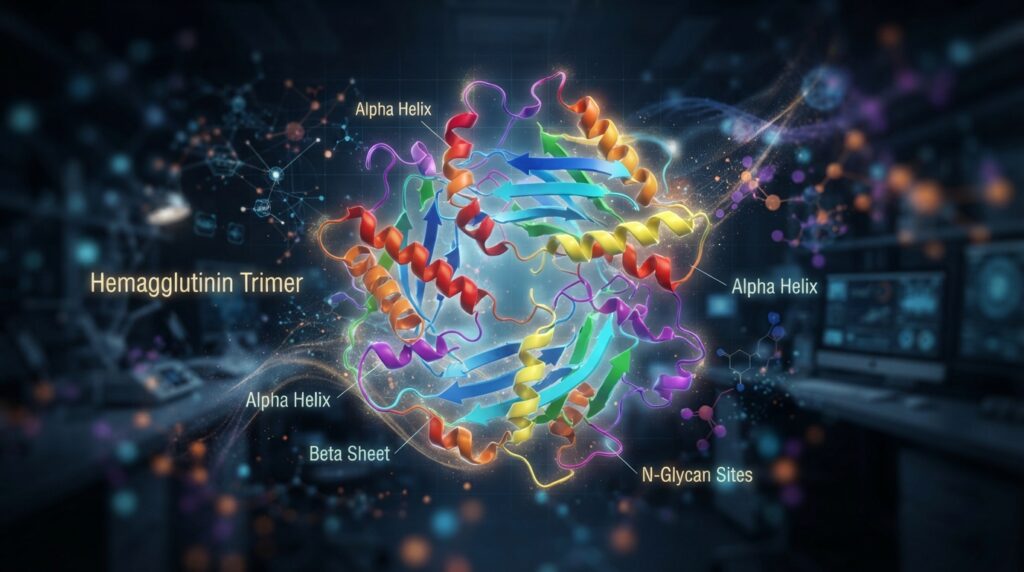
Traditional drug discovery involves investigating large numbers of compounds to determine whether any influence a disease-related biological target. Most candidates fail, so researchers spend substantial time testing molecules that never become useful treatments.
AI can narrow the search before physical testing begins. A model may be trained on known molecular structures, biological effects, toxicity data, and experimental results. It can then rank untested compounds or generate new structures that may have desired properties.
A well-known example is the identification of halicin. Researchers trained a neural network to predict antibacterial activity and used it to screen chemical libraries. The model highlighted a structurally unusual compound that later showed antibacterial activity in laboratory and animal studies. The original Cell study on AI-assisted antibiotic discovery illustrates how machine learning can identify candidates outside familiar chemical patterns.
AI can support drug research by:
- Finding possible disease targets.
- Screening virtual compound libraries.
- Predicting molecular interactions.
- Estimating toxicity and absorption risks.
- Suggesting modifications to promising molecules.
- Identifying new uses for existing compounds.
An AI-selected molecule is not a finished medicine. It must still pass laboratory validation, safety testing, clinical trials, and regulatory review. Artificial Intelligence can accelerate the early search, but it cannot skip the evidence required to show that a treatment is safe and effective.
3. Discovering New Materials
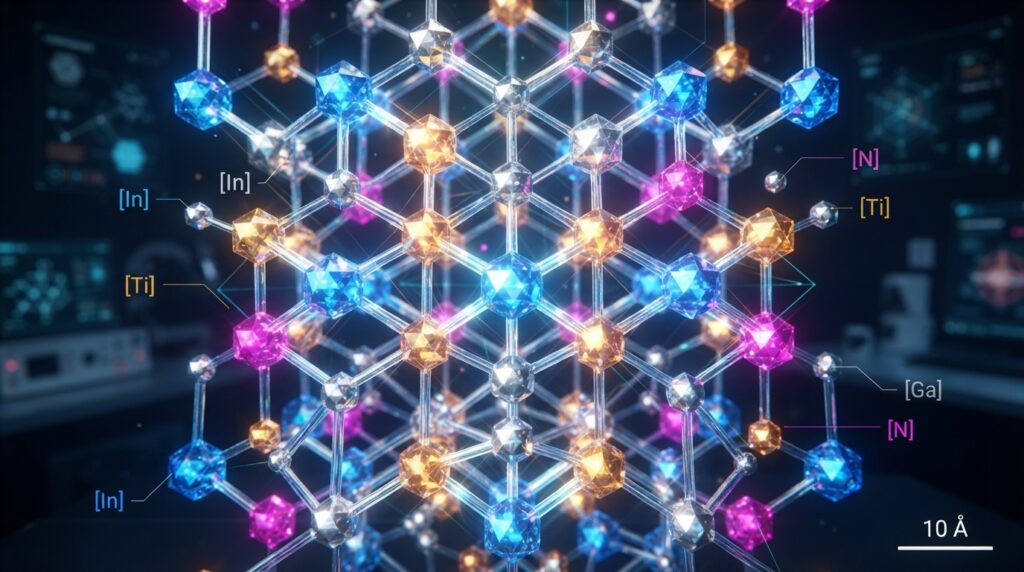
Materials scientists search for substances with properties suited to batteries, solar cells, electronics, construction, manufacturing, and energy storage. The possible combinations of elements and atomic structures are far too numerous to test manually.
AI models can estimate whether a proposed structure is stable and whether it may have useful properties. Researchers can then focus laboratory resources on the strongest candidates.
Google DeepMind’s GNoME system used graph neural networks and computational physics to explore crystal structures at a much larger scale. The published Nature study on AI-powered materials discovery reported 381,000 entries added to an updated set of computationally stable crystals, with hundreds matching structures that were independently produced experimentally.
This does not mean every predicted material can be manufactured or used commercially. A material may be computationally stable but difficult to synthesize, too expensive, unsafe, or unsuitable for large-scale production.
That gap between prediction and production is why autonomous laboratories matter.
4. Creating Self-Driving Laboratories
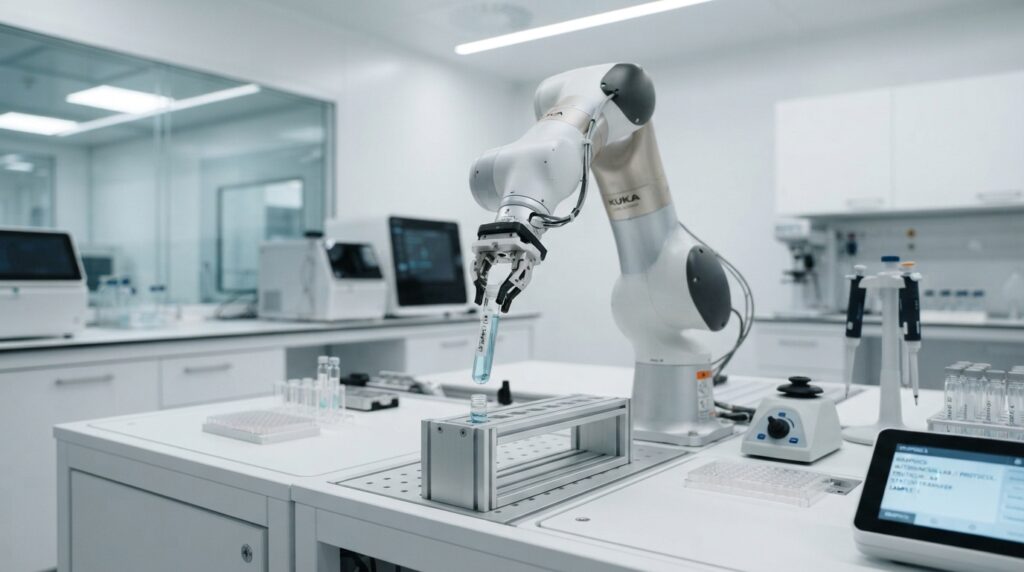
A self-driving laboratory combines Artificial Intelligence, robotics, scientific instruments, and automated data analysis.
A typical closed-loop process works like this:
- AI selects a promising experiment.
- Robotic equipment prepares and tests the sample.
- Instruments measure the result.
- Software compares the result with the prediction.
- The model selects an improved follow-up experiment.
- The cycle repeats.
The A-Lab materials system used machine learning, scientific literature, robotics, and active learning to plan and perform experiments involving inorganic materials. During its reported operation, it produced 36 of 57 targeted compounds.
A valuable lesson came after publication. A 2026 correction clarified that some original descriptions of material novelty could be misunderstood: the targets were new to the platform, not necessarily unknown to science.
This distinction shows why scientific language and independent review remain essential. Fast automation can produce more results, but it can also spread an inaccurate interpretation more quickly when claims are not carefully defined.
Research teams adopting automated workflows also need reliable software practices. The same principles used in professional development—version control, testing, documentation, and human review—are discussed in this guide to PHP development tools and quality-control workflows.
5. Improving Weather Forecasting
Weather prediction requires processing observations from satellites, weather stations, radar systems, aircraft, and other sources. Traditional forecasting models solve physical equations that describe the atmosphere, but they require significant computing power.
GraphCast showed that a machine-learning system trained on historical weather data could produce ten-day global forecasts for hundreds of variables. In its published evaluation, it outperformed a leading operational forecasting system on most of the tested targets. The full GraphCast study in Science describes the model and its evaluation.
AI forecasting can help by:
- Producing predictions quickly.
- Running multiple scenarios efficiently.
- Improving some storm-track predictions.
- Supporting rapid updates.
- Reducing the cost of repeated simulations.
AI weather systems are not universally superior. Research published in 2026 found that physics-based systems could still outperform leading AI models for certain precipitation extremes.
This is a reminder that predictions should be treated as probabilities rather than guarantees. A similar distinction between helpful estimates and confirmed decisions is explained in this guide to understanding prediction-tool accuracy.
6. Finding Patterns in Scientific Images and Data
Modern research instruments generate more information than scientists can manually inspect. Telescopes produce enormous image archives, microscopes capture thousands of cells, and medical scanners generate complex three-dimensional images.
Computer-vision models can classify objects, detect anomalies, measure structures, and identify observations that deserve human attention.
Practical applications include:
- Finding unusual astronomical objects.
- Counting and classifying cells.
- Detecting changes in medical scans.
- Tracking animal populations in camera images.
- Identifying defects in experimental materials.
- Measuring environmental changes using satellite data.
The model does not decide whether an observation represents a scientific discovery. It acts as a filter that helps researchers find potentially important evidence inside a much larger dataset.
7. Organizing Scientific Literature and Generating Hypotheses
No researcher can read every paper published in a growing scientific field. Language models can help summarize publications, group related findings, extract reported methods, and identify possible connections between studies.
This can support hypothesis generation. For example, an AI system may detect that a biological pathway studied in one disease resembles a pathway investigated in another field. Researchers can then examine whether the connection is scientifically meaningful.
The risk is hallucination. A language model may invent a citation, misstate a finding, or present speculation as established evidence. Scientific assistants therefore need grounding, meaning their answers should be connected to approved documents and traceable sources. The same basic principle is important in commercial systems, as explained in this comparison of AI chatbots and knowledge-grounded answers.
Researchers should always open the original paper, verify the authors’ actual conclusion, and check whether later studies support or contradict it.
Benefits of Artificial Intelligence in Scientific Discovery
Faster screening
AI can evaluate large numbers of candidates before researchers perform expensive experiments.
Better use of laboratory resources
Researchers can prioritize experiments expected to provide the most useful information.
Detection of hidden patterns
Models can identify relationships that may not be obvious through manual analysis.
More consistent measurement
Automated systems can analyze images or sensor data using the same criteria across thousands of samples.
Stronger collaboration
AI-supported research often brings together biologists, chemists, physicists, engineers, data scientists, and software developers. Managing these multidisciplinary efforts requires clear responsibilities and shared systems, similar to the practices covered in this guide to project management tools for collaborative teams.
Drawbacks and Risks Researchers Must Manage
Artificial Intelligence can make research faster without necessarily making it correct.
The most important risks include:
- Biased training data: A model may reproduce gaps or errors in its dataset.
- Data leakage: Information from the test set may accidentally influence training, producing unrealistic performance.
- Poor generalization: A system may work in one laboratory or population but fail elsewhere.
- False confidence: A polished prediction may appear more certain than the underlying evidence.
- Limited interpretability: Researchers may not understand why a model produced its result.
- Reproducibility problems: Missing code, data, prompts, or model versions can prevent independent verification.
- Privacy concerns: Medical, genetic, and personal data require strong safeguards.
- Unequal access: Well-funded institutions may have more computing power and proprietary data than smaller research teams.
The NIST AI Risk Management Framework recommends treating validity, reliability, transparency, privacy, security, and accountability as connected parts of responsible AI use.
Best Practices for Using AI in Science
Researchers should follow a disciplined validation process:
- Define the scientific question before selecting a model.
- Document where the training data came from.
- Separate training, validation, and independent test data.
- Compare AI performance with strong traditional methods.
- Report uncertainty instead of presenting predictions as facts.
- Test performance across laboratories, populations, and conditions.
- Verify important results through physical experiments.
- Preserve code, model versions, prompts, and analysis settings.
- Encourage independent replication.
- Keep qualified humans responsible for final conclusions.
Scientific communication matters as much as model performance. Researchers must explain complex findings without exaggerating what the AI proved. Visual tools can help make technical concepts easier to understand, but generated material still requires factual review, a lesson also relevant to educators using AI-generated classroom content.
Frequently Asked Questions
Can Artificial Intelligence make scientific discoveries independently?
AI can generate candidates, detect patterns, and propose experiments, but meaningful discoveries still require human-defined questions, reliable data, interpretation, and independent validation.
Does AI replace laboratory experiments?
No. It can reduce the number of experiments researchers need to perform, but predictions generally require laboratory or real-world confirmation.
Which scientific fields benefit most from AI?
AI is particularly useful in biology, medicine, chemistry, materials science, genetics, astronomy, climate research, and fields that generate large datasets.
How is AI used in drug discovery?
It can identify biological targets, rank molecules, predict interactions, estimate certain risks, and suggest new structures for laboratory testing.
What is a self-driving laboratory?
It is a research system in which AI chooses experiments, robots perform them, instruments collect results, and software uses the new data to select the next experiment.
Are AI scientific predictions always accurate?
No. Their reliability depends on the quality of the data, the model design, the evaluation method, and whether the new problem resembles the conditions used during training.
Can AI create false scientific information?
Yes. Language models can invent references or misrepresent research, while predictive models can produce confident but incorrect outputs. Human verification is necessary.
Will AI replace scientists?
AI is more likely to change scientists’ work than eliminate it. Researchers will spend less time on some repetitive tasks and more time defining problems, designing validation studies, and interpreting results.
Conclusion
Artificial Intelligence is accelerating scientific discovery by shrinking the search space between a question and a useful experiment. It can predict protein structures, identify drug candidates, explore possible materials, analyze scientific images, improve some weather forecasts, and operate automated laboratories.
Its real value is not that it replaces the scientific method. It strengthens selected parts of that method by helping researchers test more possibilities and learn from results more quickly.
The next step for research institutions is not simply to adopt the newest model. It is to build trustworthy workflows around AI: use high-quality data, report uncertainty, preserve reproducibility, verify predictions experimentally, and keep humans accountable for scientific conclusions.
When those safeguards are present, Artificial Intelligence becomes more than a fast analytical tool. It becomes a practical research partner that can help scientists investigate difficult questions without lowering the standard of evidence required to answer them.
