



How Accurate Is Snow Day Calculator?
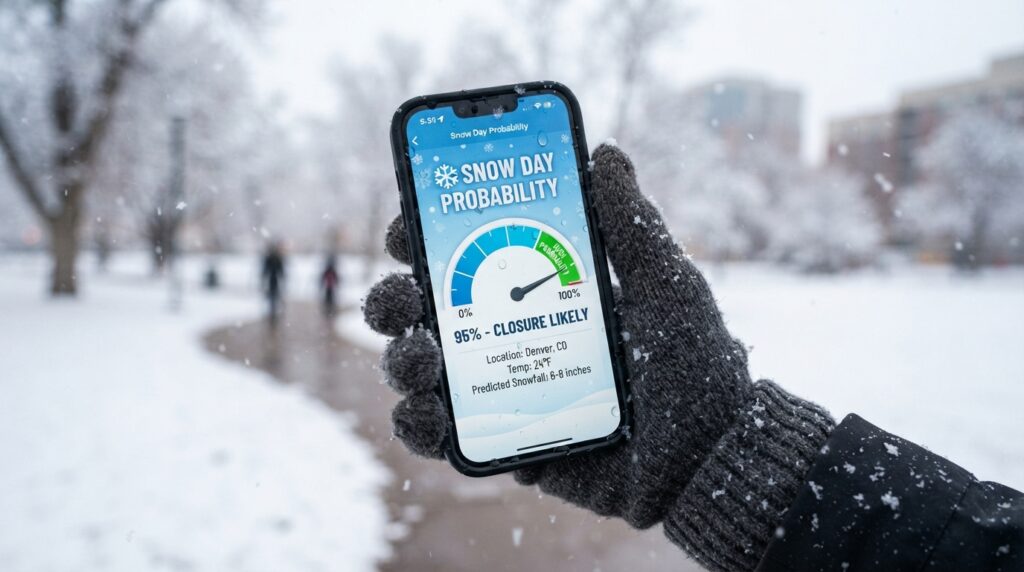
Every winter, the same question spreads through group chats and classrooms across the country. Will school close tomorrow? Millions of kids and parents open a snow day calculator, type in a ZIP code, and wait for a number. But how accurate is snow day calculator, really? Is it something you can trust, or just a fun guess dressed up as science?
This guide answers that question in plain language. We look at where the numbers come from, why they are never perfect, and what other guides on this topic leave out. By the end, you will know exactly how much weight to put on that percentage on your screen.
What Is a Snow Day Calculator
A snow day calculator is a tool that guesses whether your school will close because of weather. You type in your ZIP code, sometimes your school type, and it gives you a percentage chance of a closure or delay.
The idea started small. Back in 2007, a middle schooler named David Sukhin built the first version as a personal project, mostly so he could figure out if he needed to do his homework. According to WBUR’s report on the calculator’s growth, the tool later grew into a website and app used by millions of students every winter, pulling data straight from National Weather Service reports.
Today there are several different snow day calculators online. Most work the same basic way.
- You enter your ZIP code
- The tool pulls current weather data for your area
- It compares that data to historical closure patterns for similar days
- It returns a percentage chance of no school
Simple to use, but that simplicity hides a lot of guesswork underneath.
How Accurate Is Snow Day Calculator, Really
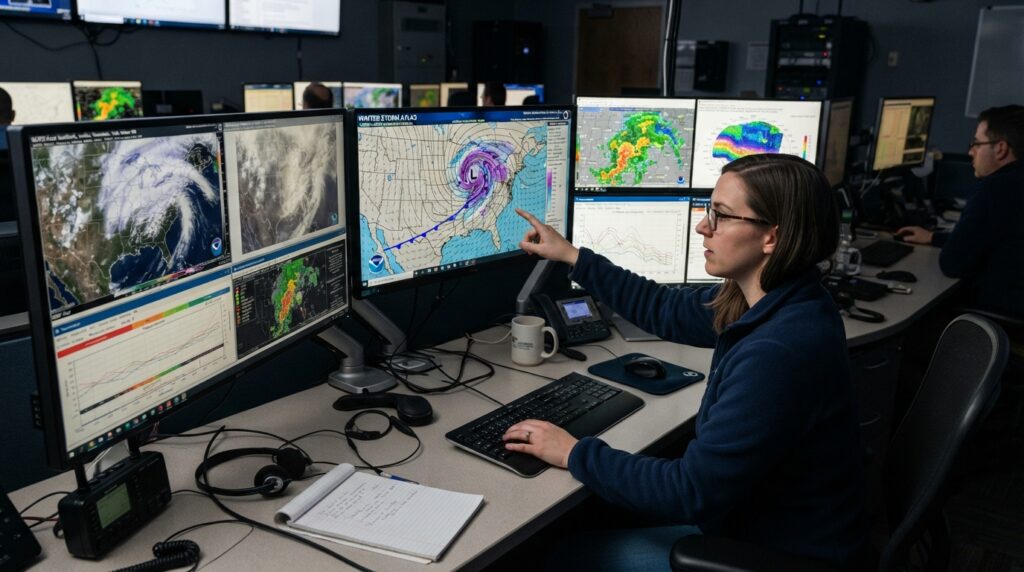
So, how accurate is snow day calculator when it actually matters? Most well established calculators land somewhere around 60 to 75 percent accuracy. That means they get the call right roughly three times out of four, and miss the other time.
That number is not random. It is largely limited by something outside any calculator’s control: the weather forecast itself. According to NOAA’s explanation of forecast reliability, a five day forecast is accurate about 90 percent of the time, while a seven day forecast drops to around 80 percent. A snow day calculator cannot be more accurate than the forecast feeding it, so some margin of error is baked in from the start.
Location also changes the picture a lot. A Washington Post analysis of forecast accuracy across the United States found that some regions, like flat coastal cities, get far more reliable forecasts than mountain or plains areas, where weather can shift in hours. If you live somewhere unpredictable, expect your calculator to be right less often too.
Why Snow Day Calculators Are Never 100 Percent Accurate
A calculator is not predicting snow. It is trying to predict a person’s decision, and that is much harder.
Here is what actually goes into a real school closure call, according to reporting from FOX Weather on the factors behind school closures:
- Total snowfall and how fast it is falling
- Ice and black ice risk on roads, which is often more dangerous than snow itself
- Wind chill and the risk of frostbite for kids waiting at bus stops
- Road conditions reported directly by transportation staff, sometimes checked at three in the morning
- How many snow days the district has already used that year
A superintendent weighs all of this personally, often alongside meteorologists and transportation directors, as described in AccuWeather’s coverage of how superintendents make closure decisions. No algorithm sees the icy back road behind the elementary school at five in the morning. A human does, and that human makes the final call.
This is the biggest gap in most articles on this topic. They mention that predictions vary, but they rarely explain that the calculator is really predicting a person, not just the sky.
Do All Snow Day Calculators Work the Same Way
No, and this matters more than people think.
The original tool built by David Sukhin uses ZIP code, school type, and historical closure data pulled from the National Weather Service, based on reporting from CBS News on the calculator’s ongoing popularity. Newer calculators built by other developers use similar core ingredients, but they weigh them differently, and some add local road condition data or machine learning models trained on past predictions.
That means two different calculators can give you two different percentages for the exact same storm. Neither one is lying. They are just built with different assumptions and different amounts of historical data for your specific area.
A few practical patterns show up again and again.
- Calculators built for one region tend to be more accurate in that region than nationwide tools
- Tools with years of historical data for your district usually beat brand new tools
- Free, simple calculators are usually less accurate than ones pulling from richer weather data sources
Content Gaps Other Guides on This Topic Miss
Most existing articles on how accurate snow day calculators are stop at a general percentage and a short list of reasons. Here is what they leave out, and what we are covering here instead.
They rarely explain where the underlying weather data even comes from. Nearly every calculator, no matter who built it, ultimately depends on National Weather Service forecasts. If that base forecast is wrong, everything built on top of it is wrong too.
They almost never mention equipment failures. A school can close because of a broken heating system or a power outage, not just weather. No calculator can predict a boiler breaking down.
They skip how kids should actually use the tool. A calculator is a fun guide, not a permission slip. Treating a high percentage as a guarantee is exactly how homework gets skipped and mornings get chaotic.
They do not explain delays versus closures well. A two hour delay depends on much smaller weather differences than a full closure, so calculators are naturally worse at predicting delays. Full closures usually happen under more extreme, easier to spot conditions.
They rarely name real historical accuracy events. During major, clearly dangerous storms, calculators tend to nail the prediction. During borderline days, with light snow or fast moving ice, accuracy drops sharply. That pattern matters more than a single average percentage.
How to Use a Snow Day Calculator the Smart Way
You do not need to stop checking your snow day calculator. Just use it the right way.
- Check the percentage the evening before, since forecasts get more accurate as the storm gets closer
- Treat anything under 70 percent as a genuine coin flip, not a strong lean either way
- Always confirm with your school’s official website, app, or automated call before making real plans
- Remember that ice storms and extreme cold are harder to predict than plain snowfall, so give those situations extra caution
- Keep a backup plan ready for both outcomes, since even a 90 percent prediction still misses sometimes
This kind of habit, trusting a helpful estimate without treating it as certain, is the same mindset that keeps any prediction tool useful rather than misleading. It is similar to how businesses lean on demand forecasting tools to plan ahead without ever assuming a forecast is guaranteed, something covered well in this look at AI chatbots built for fast, automated customer response, where the tool speeds up decisions but a human still checks the final result.

Why Schools Do Not Rely on These Calculators Themselves
It is worth saying clearly: no school district uses a public snow day calculator to make its actual decision. Superintendents rely on direct reports from transportation staff, real time weather updates, and their own experience with the district’s specific roads.
That is a good reminder that trustworthy decisions usually come from checking real, verified information rather than a single guess, no matter how convenient that guess is. Schools that communicate closure decisions clearly and quickly usually do it through official alerts and email systems, not social media rumors, a habit worth borrowing personally too, as explained in this guide to reliable email management tools for staying organized.
Some closures also happen for reasons that have nothing to do with the forecast at all, like a failed heating system on a freezing morning. That kind of equipment risk is exactly why routine safety checks matter so much, similar to how property safety and compliance inspections protect buildings from problems a forecast could never catch in the first place.
Building Good Judgment Around Predictions
Learning to read a percentage without overreacting to it is a real skill, and it is one worth building early. The same kind of calm, evidence based decision making shows up in plenty of other places too, including how new professionals are taught to make good calls under pressure, a topic explored in this guide on core skills every new professional needs to build early.
It also helps to remember that even well built systems fail sometimes, not because the plan was bad, but because a small, unexpected part broke down, the same lesson covered in this breakdown of common problems that affect complex mechanical systems. A snow day calculator, a cooling system, and a superintendent all deal with the same basic challenge: working with the best information available, knowing it still is not perfect.
Real time, location based apps face this exact tradeoff constantly, including services people use every day like the ones compared in this rundown of ride hailing app development companies, which also depend on live, imperfect data to make fast predictions people actually rely on.
Frequently Asked Questions
How accurate is snow day calculator on average?
Most established snow day calculators are right about 60 to 75 percent of the time, mainly because they depend on weather forecasts that carry their own margin of error.
Why isn’t a snow day calculator ever 100 percent accurate?
Because it is predicting a human decision, not just the weather. Superintendents weigh road conditions, staffing, wind chill, and local knowledge that no algorithm can fully see.
Are newer snow day calculators more accurate than older ones?
Often yes, especially tools with years of historical data for your specific district. Brand new or nationwide tools without local data tend to be less reliable.
Can a snow day calculator predict delays as well as full closures?
No. Full closures happen under more extreme, easier to predict conditions. Two hour delays depend on smaller weather differences, so calculators are usually less accurate for delays.
Should I skip homework based on a high snow day percentage?
No. Treat any prediction as a helpful guess, not a guarantee. Always wait for your school’s official closure announcement before making real plans.
Do schools actually use these calculators to decide closures?
No. Superintendents rely on direct road reports, real time weather data, and staff input. Public calculators are built for students and parents, not for the district’s own decision making.
Final Thoughts
So, how accurate is snow day calculator in the end? Good enough to be genuinely useful, not good enough to trust blindly. The tool works from real weather data and real historical patterns, but it is still predicting a human choice made in the dark, early hours of a storm.
Use it the way it is meant to be used. Check it the night before, treat it as a strong hint rather than a fact, and always wait for the official word from your school. That is how you get the fun of the guess without the risk of getting caught unprepared.
