


4 Essential Skills Every New HR Professional Needs to Build Today
Starting your first HR job feels a bit like being handed ten jobs at once. One day you are writing an offer letter. The next day you are calming down an upset employee. Then someone asks you to pull a report from the HR system, and you realize you never got proper training for any of it.
This is normal. Every HR professional goes through it. The good news is that you do not need to master everything on day one. You just need to focus on the right skills first.

This guide breaks down the 4 essential skills every new HR professional needs to build today, why they matter, and exactly how to build them, step by step. We will also cover the questions people search for right before and right after reading articles like this one, plus a few things most guides on this topic completely skip.
Why HR Skills Matter More Than Ever
HR is not just paperwork anymore. Companies now expect HR to help hire the right people, keep employees happy, handle sensitive issues fairly, and use data to make smart decisions. All of this happens while new tools and software keep changing how HR teams work day to day.
That mix of people skills and tech skills is exactly why the 4 essential skills every new HR professional needs to build today are so different from what HR looked like ten years ago. You need to be good with people, but you also need to be comfortable with systems, data, and digital tools.
Let us walk through each skill.
1. Communication and Active Listening

Communication is the base skill for every part of HR. If you cannot explain a policy clearly, or if you do not truly listen when an employee shares a concern, everything else in your job gets harder.
New HR professionals often think communication means talking well. It actually means listening well first.
What good HR communication looks like:
- Explaining policies in plain words, not company jargon
- Asking follow up questions instead of assuming you understood
- Writing emails and messages that are short, clear, and respectful
- Giving feedback in a way that helps, not one that embarrasses someone
- Staying calm and neutral during difficult conversations
How to build this skill fast:
- Practice writing shorter emails. Cut every sentence that does not add value.
- Repeat back what someone said before replying, so they know you understood them.
- Sit in on a few employee meetings just to observe how experienced HR staff handle tricky questions.
- Ask a mentor to review one of your written policies or announcements each week.
As your team grows, so does your inbox. Most new HR staff underestimate how much time goes into managing daily messages, requests, and follow ups. A structured approach to your inbox, using folders, templates, and a clear reply schedule, saves hours every week. If your workload includes a heavy volume of employee emails, this guide on best email management tools is worth a look, since the right setup can cut your response time significantly.

2. Emotional Intelligence and Conflict Resolution
HR sits in the middle of almost every workplace disagreement. A manager and an employee do not see eye to eye. Two coworkers clash over a project. Someone feels they were treated unfairly. HR is usually the first call.
Emotional intelligence means you can read a room, understand what someone is really feeling, and respond without making things worse. Conflict resolution means you can guide two upset people toward a fair outcome without picking a side too early.
Signs you are building strong emotional intelligence:
- You notice when someone is upset even before they say anything
- You stay calm when someone raises their voice
- You separate the person from the problem
- You ask questions instead of jumping to conclusions
- You follow up after a conflict is resolved to check things actually improved
Practical steps for handling conflict as a new HR professional:
- Listen to both sides separately before bringing people together.
- Stick to facts and specific examples, not general complaints.
- Ask each person what outcome they actually want.
- Document the conversation and the agreed next steps.
- Check in again after one or two weeks.
This is also where fairness and ethics come in. Every decision you make around conflict, discipline, or complaints needs to follow your company policy and local labor law. Reviewing basic employment law guidance from a source like the U.S. Department of Labor is a smart habit to build early, even if legal questions eventually go to a specialist.
3. HR Technology and People Data Skills
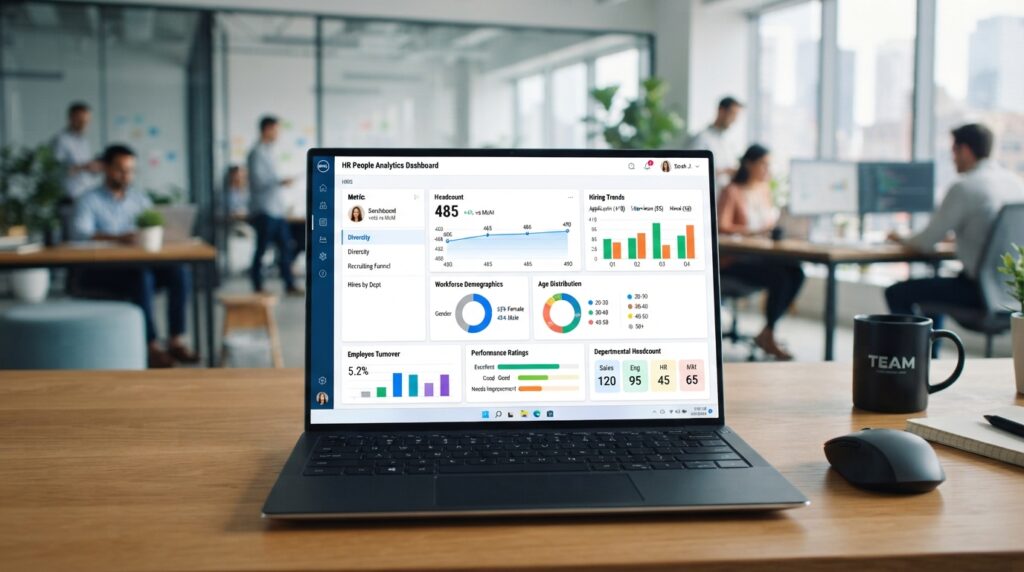
HR software is not optional anymore. Almost every company uses some kind of HR information system, applicant tracking tool, or employee self service portal. If you are not comfortable with these systems, you will fall behind quickly.
This does not mean you need to become a data scientist. It means you need to know how to pull a report, read a simple dashboard, and spot patterns like high turnover in one department or a slow hiring process.
Core tech and data tasks new HR staff should get comfortable with:
- Updating and reading employee records in the HR system
- Running basic reports on headcount, attendance, or turnover
- Understanding how applicant tracking systems sort resumes
- Knowing what an HRIS is and how your company’s system is set up
- Recognizing where AI tools are being used, such as resume screening or chat based employee support
Many companies now use AI chat tools to answer common employee questions, like leave balances or benefits details, before a request ever reaches a human. Getting familiar with how these systems work will save you time and make you look sharp in interviews and reviews. This overview of AI chatbots for customer support explains the same technology many HR teams now use for employee self service, and it is a useful way to understand the tools before your company rolls them out.
Employee data is also sensitive. Salaries, health information, and personal details all pass through HR systems. Learning the basics of data privacy is not just an IT job anymore, it is part of the modern HR role. If you want a simple starting point on how online privacy tools work, this piece on proxy servers and anonymity is a useful, easy read that translates well into thinking about how employee data should be protected.
4. Business Awareness and Adaptability
The fourth skill is often the one new HR professionals skip, and it is the one senior leaders notice the most. Business awareness means understanding how your company makes money, what its goals are, and how HR decisions connect to those goals.
Adaptability means you can handle change without losing your footing. New policies, new software, a merger, a restructure, none of it should throw you off completely.
Why this matters:
If you only know HR rules but not the business itself, you will struggle to explain why a decision matters. If a manager asks why headcount is frozen or why a bonus structure changed, you need to connect it to the bigger picture, not just repeat a policy line.
How to build business awareness as a new HR professional:
- Read your company’s public reports or internal updates on performance.
- Sit in on a few meetings outside HR, like sales or operations, when possible.
- Ask your manager how HR goals tie into company goals this year.
- Follow one or two respected HR publications to see how other companies are adapting.
- Keep a short list of recent changes at your company and how HR responded to each one.
Adaptability also shows up in smaller ways, like learning a new internal tool without complaining, or adjusting your communication style for a first time manager versus a senior director. Companies that build their own internal HR portals or career pages often go through the same choice new HR teams face with any software, choosing between a flexible custom setup and a quicker template based option. This comparison on custom websites versus WordPress explains that tradeoff clearly, and the same thinking applies when your company decides how to build its careers page or employee portal. If your team is working with a tighter budget, this breakdown of affordable web design versus cheap website builders is a helpful next read before choosing a platform.
What Most Guides on This Topic Miss
A lot of articles about HR skills stop at a list. They rarely explain what a new HR professional actually needs in the first three months on the job. Here is what usually gets left out.
Your First 90 Days Plan
- Days 1 to 30: Learn the systems, meet key people, shadow experienced HR staff, and read every existing policy document.
- Days 31 to 60: Start handling small tasks independently, like onboarding paperwork or simple employee questions, with a mentor checking your work.
- Days 61 to 90: Take on one full process end to end, such as a hiring cycle or a policy update, and ask for direct feedback.
Common Mistakes New HR Professionals Make
- Promising something to an employee before checking company policy
- Avoiding difficult conversations instead of addressing them early
- Treating every request as urgent, which burns out your time and focus
- Ignoring documentation until a problem becomes serious
- Assuming HR software works the same everywhere, without learning your specific company’s setup
Compliance Basics You Cannot Skip
Every new HR professional needs a working knowledge of basic labor law, even in an entry role. This includes fair hiring practices, anti discrimination rules, wage and hour basics, and how to handle a harassment complaint properly. You do not need to be a lawyer, but you need to know when a situation needs to go to legal or senior HR right away. The Equal Employment Opportunity Commission publishes clear, free guidance that is worth bookmarking early in your career.
Building a Personal Development Plan
Pick one skill from this list each quarter and set a small, measurable goal. For example, sit in on five conflict conversations this quarter, or complete one HR system certification. Small consistent goals build real skill faster than trying to learn everything at once.
Tools Every New HR Professional Should Get Familiar With
- HR information systems (HRIS) for employee records
- Applicant tracking systems for hiring and resumes
- Payroll and benefits platforms
- Employee engagement survey tools
- Learning management systems for training
- Basic reporting or dashboard tools, even simple spreadsheets
You do not need to be an expert in all of them right away. Familiarity is enough at the start. Depth comes with time on the job.
Quick Recap
The 4 essential skills every new HR professional needs to build today are:
- Communication and active listening
- Emotional intelligence and conflict resolution
- HR technology and people data skills
- Business awareness and adaptability
Master these four, and everything else in HR, from hiring to policy writing to employee engagement, becomes far easier to learn.
Frequently Asked Questions
What is the most important skill for a new HR professional?
Communication comes first. Almost every other HR task, from hiring to conflict resolution, depends on your ability to explain things clearly and listen carefully.
How long does it take to become good at HR?
Most people feel confident in core HR tasks within six months to a year, though skills like business awareness and conflict resolution keep improving for years with more experience.
Do new HR professionals need to know how to code or use AI tools?
No coding is required. You do need basic comfort with HR software and a general understanding of where AI tools are used in hiring and employee support, since these tools are becoming standard across most companies.
What certifications help new HR professionals the most?
Entry level certifications from recognized bodies like SHRM or CIPD help build structured knowledge, but real skill still comes from hands on practice, mentorship, and handling real situations at work.
How do new HR professionals build confidence with difficult conversations?
Start small. Observe experienced HR staff first, then handle low risk conversations with support nearby, and build up to harder situations as your comfort grows. Preparation and a calm tone matter more than experience in the early stages.
Is emotional intelligence something you can actually learn, or is it natural?
It can absolutely be learned. Emotional intelligence grows through practice, reflection, and feedback, just like any other workplace skill. Paying attention to your own reactions during stressful moments is a strong starting point.
