



An Arch Wall Shelter Carries Snow With Less Steel Because The Curve Never Lets The Load Bend Anything
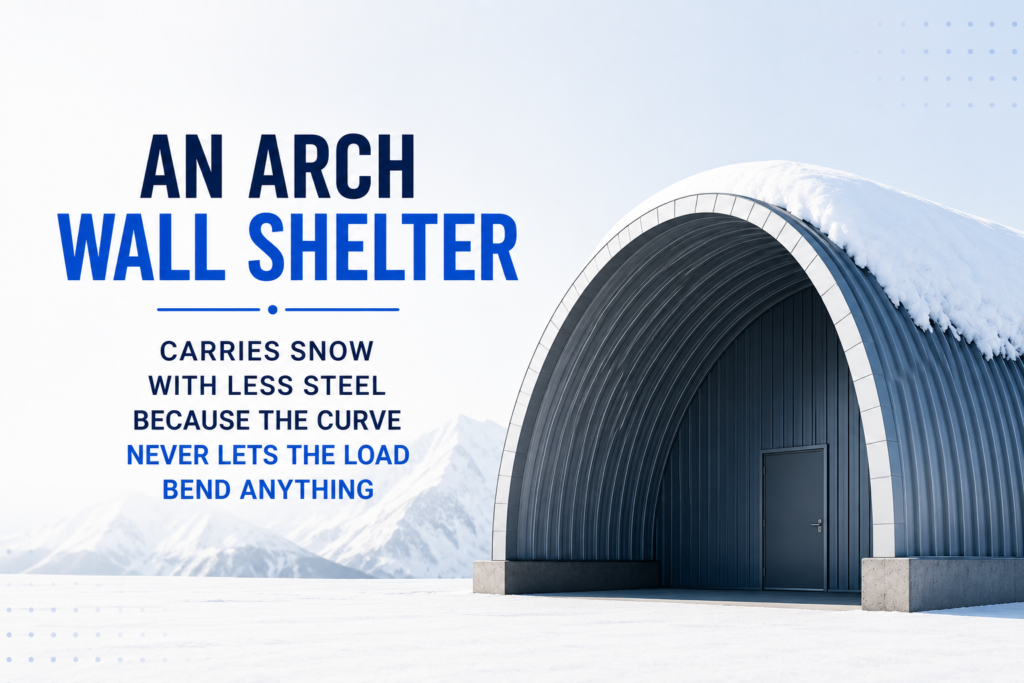
Picture a straight sided shed after a heavy snowfall. The roof sags in the middle. The corners creak. In bad years, the whole thing folds over like a cardboard box left out in the rain. Now picture a curved metal building next to it, holding the exact same pile of snow without a single groan. Same weather. Same amount of snow. Very different outcome.
That difference is not luck. An arch wall shelter carries snow with less steel because the curve never lets the load bend anything, and once you understand why, buying the right storage building for winter gets a lot easier.
This guide explains that idea in plain language, compares arch shelters to straight walled buildings, and covers the parts that most articles on this topic skip, like steel gauge, arch spacing, anchoring, and how snow drifts change everything.
Why This Actually Matters To You
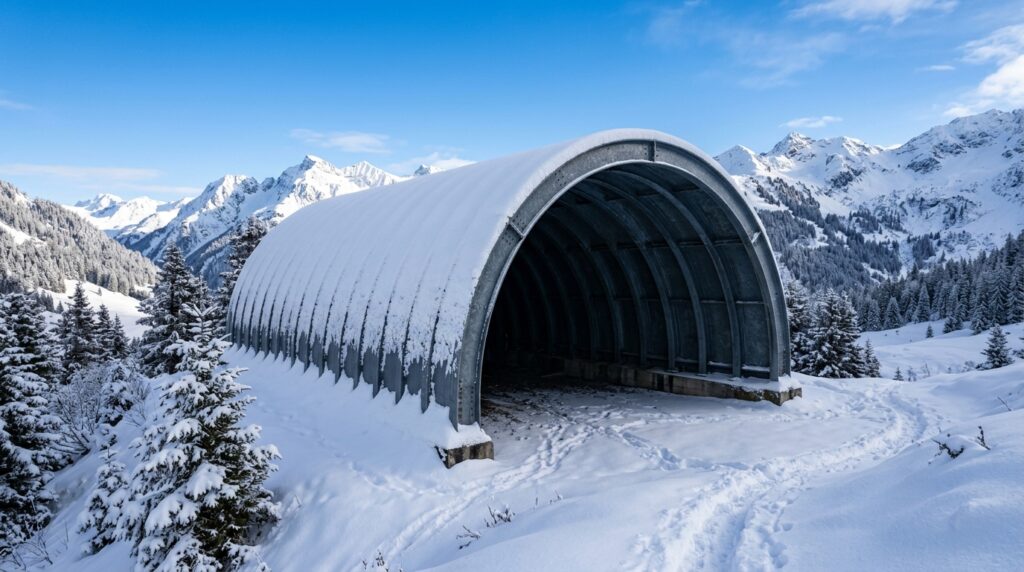
If you store hay, equipment, vehicles, or supplies outside during winter, a shelter that fails under snow does not just mean a repair bill. It can mean crushed equipment, lost inventory, or a dangerous collapse while someone is nearby.
Every year, storage buildings fail in snow country, and almost every failure traces back to the same root cause. The building was asked to bend, and steel is bad at bending. Understanding why an arch shape avoids that problem is the single most useful thing you can learn before buying a shelter.
What Is An Arch Wall Shelter?
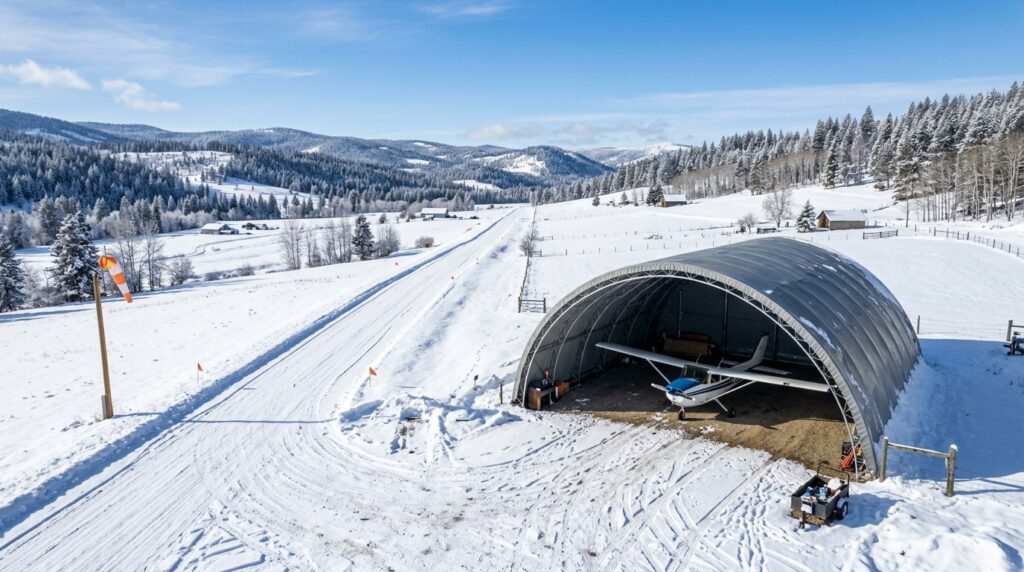
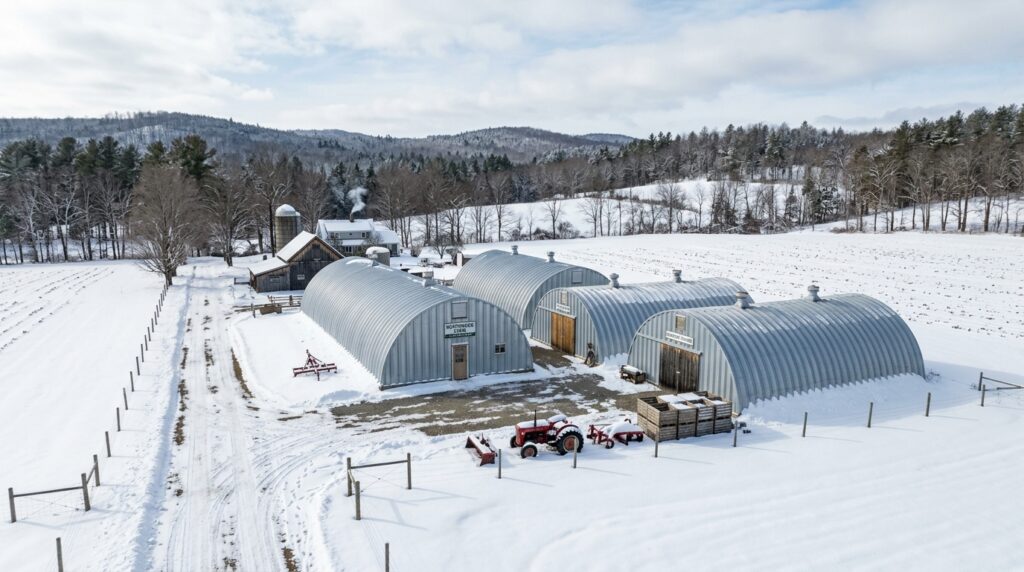
An arch wall shelter is a building made from curved steel tubing or ribs, covered with a fabric or metal skin, shaped like half a tube or a rounded tunnel. There are no separate walls and roof. The wall curves straight up and over into the roof in one continuous piece.
Compare that to a straight wall shelter, sometimes called a peak style or an A frame building. Those have vertical walls that meet the roof at a corner, similar to a traditional house shape.
Both types use steel and both are sold for the same jobs, things like farm storage, equipment shelters, RV covers, and workshops. The shape is where they stop being similar.
The Simple Reason Curves Beat Corners
Here is an experiment a ten year old can try at home. Take a plastic drinking straw. Push on both ends toward each other. It barely bends, because you are squeezing it along its length, and steel and plastic are both very strong when squeezed that way.
Now push on the middle of the straw sideways instead. It folds instantly, with almost no force at all.
That is the entire secret behind why an arch wall shelter carries snow with less steel because the curve never lets the load bend anything. A straight beam under weight gets pushed sideways in the middle, the same way you pushed the straw. A curved arch only ever gets squeezed along its own length, the way you squeezed the straw end to end.
Engineers have a name for this squeezing force. They call it compression. Steel handles compression extremely well. What steel handles poorly is bending, which engineers call a bending moment. A flat roof beam under snow is fighting a bending moment the entire time. An arch is not.
Where The Straight Wall Actually Fails
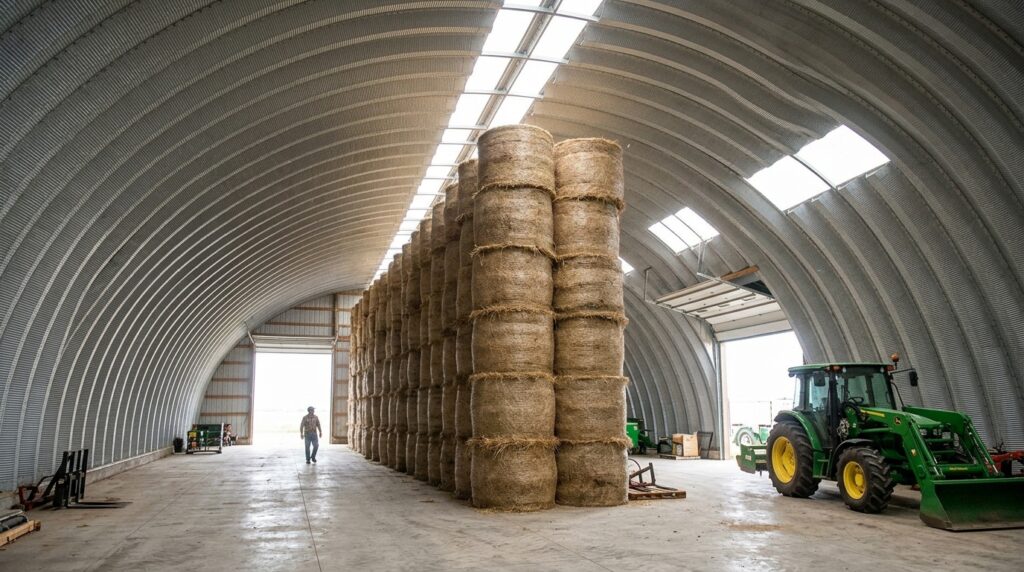
In a straight walled shelter, the weak point is always the same spot, the corner where the vertical wall meets the sloped roof. That joint has to resist rotation, meaning it has to stop the corner from folding open under weight.
Resisting rotation takes a lot of extra steel. That is why straight wall buildings need thicker tubing, more bracing, and heavier corner brackets to hit the same snow rating as an arch. Storage buildings built with an arch shape are engineered to meet or exceed local building codes for wind load, snow load, and live loads, and are built with no interior columns or trusses getting in the way, which is only possible because the shape itself carries the weight instead of a frame of separate beams.
How The Curve Actually Moves The Weight
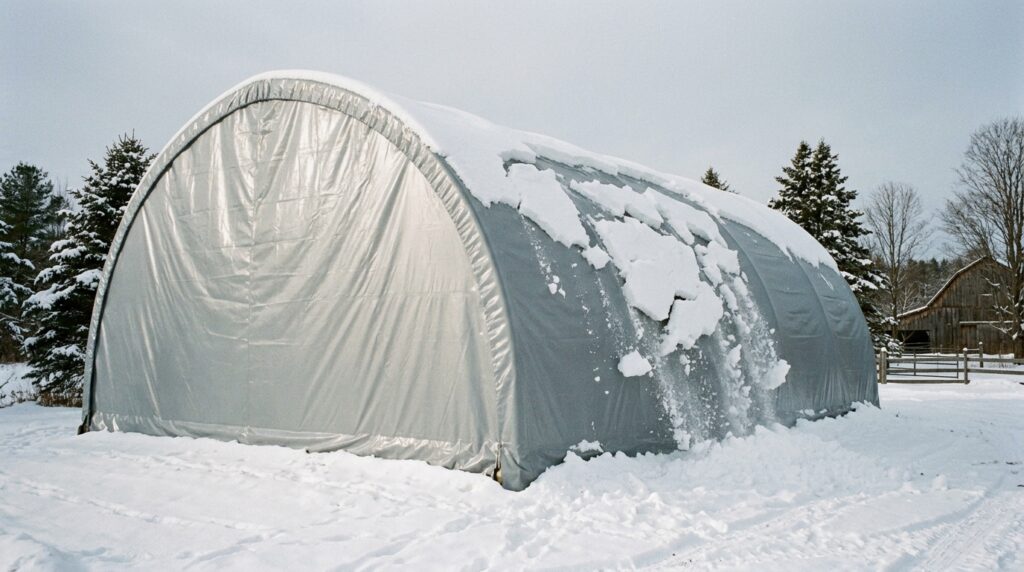
Snow lands on the roof and pushes down. In a straight wall building, that push travels down through rafters, into posts, then finally into the ground, changing direction sharply at every corner along the way. Each direction change is a place where bending happens.
In an arch, the curve turns roof pressure into force that travels along the steel shell itself, moving continuously from the top of the arch down through the seams and into the base, without ever hitting a sharp corner that would create a bending point.
Think of it like a rainbow shaped bridge instead of a flat plank bridge. A flat plank sags in the middle under weight. A rounded bridge shape spreads that same weight along the whole curve instead of concentrating it in one spot.
Arch Wall Shelter vs Straight Wall: A Side By Side Look
| Feature | Arch Wall Shelter | Straight Wall Shelter |
|---|---|---|
| How it carries snow load | Compression along the curve | Bending at wall to roof corners |
| Steel needed for the same snow rating | Less | More |
| Interior columns needed | Usually none | Sometimes needed for wider spans |
| Usable wall height at the edges | Lower, walls curve inward | Full height along the sides |
| Wind resistance | Strong, shape sheds wind naturally | Good, but flat walls catch more wind |
| Base anchoring needs | Must resist outward spreading force | Simpler downward and uplift forces |
| Best for | Maximum snow rating per dollar of steel | Storing tall items along the walls |
Neither shape is universally better. A farmer stacking pallets to the ceiling along the walls may prefer the straight wall design, even though it costs more steel for the same rating. A grower who stores everything down the center of the floor loses nothing by choosing the arch and gains a lighter, often cheaper structure.
The Part Most Articles Skip: Snow Drift, Not Just Snow Weight
A lot of guides talk about snow load like it is one even blanket sitting on the roof. In real winters, that is rarely true. Wind pushes snow around, piling it against one side of a building or into a corner, creating a drift that can weigh two to three times more than a flat, even layer.
This drifting effect got a major update in recent building codes, where a newer measurement called the Winter Wind Parameter now tracks regional wind patterns specifically during the months when snow is on the ground, which helps predict how likely snow is to blow off a roof or pile up dangerously in one spot. That single change affects how every shelter, arch or straight walled, gets rated for a specific location.
For an arch wall shelter, uneven drift load tries to change the round shape rather than just press straight down, which is a different kind of stress than a flat roof deals with. That is exactly why the curved frames in a shelter are cross braced to each other along the length of the building, so no single arch has to fight a lopsided snow pile alone.
Why The Base Matters As Much As The Curve
Here is something competitor guides mention in passing but rarely explain well enough to act on. An arch under a heavy snow load does not just push straight down. It also pushes outward at the base, trying to flatten and spread apart, the same way pressing down on a wet noodle bridge would push the ends outward.
That outward push is called thrust, and it is the tradeoff for avoiding bending stress higher up. If the base is not anchored properly, the walls slowly spread, the roof flattens, and the whole structure weakens over time, even without a single dramatic storm.
Practical anchoring steps that actually prevent this:
- Anchor into a proper concrete pad or footing, not just packed dirt, whenever the shelter will carry a real winter snow load.
- Use anchor types matched to your ground conditions. Sandy soil, clay, and gravel all hold anchors differently.
- Check anchor tightness every fall before winter starts, since ground can shift or settle over a year.
- Work with the manufacturer or an engineer to confirm the anchoring method matches the wind and snow rating stamped on the building, because a structure only performs at its rated capacity when it is anchored the way it was designed to be.
Steel Gauge And Rib Spacing: The Other Half Of The Story
Shape explains why an arch wall shelter carries snow with less steel, but shape alone is not the entire picture. Two arch buildings with the exact same curve can still perform very differently depending on the steel itself.
Steel gauge works backwards from what people expect. A lower gauge number actually means thicker, stronger steel, so 16 gauge steel is stiffer than 22 gauge steel. Corrugation ribs, the wavy ridges pressed into the panels, add extra stiffness and help resist bending even further. Deeper ribs resist bending better than shallow ones, even when the base steel thickness is identical.
Arch spacing matters just as much. Building suppliers who specialize in these structures generally avoid spacing the curved frames more than five feet apart, because wider spacing is the single most common reason a shelter frame weakens and eventually collapses under snow. When you compare two quotes, do not just compare gauge. Ask about rib depth and how far apart the arches are set.
Actionable Tips Before You Buy
- Ask for the engineered snow load rating in your local units, usually pounds per square foot or kilopascals, not just a general claim like “heavy duty.”
- Confirm the rating matches your actual location, since a building rated for a mild climate can fail badly somewhere with heavy lake effect or mountain snow.
- Compare steel gauge and rib depth, not just tubing diameter, between different suppliers.
- Ask how far apart the arches are spaced, and be cautious of anything wider than five feet in a serious snow region.
- Do not skip anchoring, even if the shelter is meant to be semi permanent or portable.
- Consider drift exposure, meaning nearby trees, taller buildings, or open fields that funnel wind and pile snow unevenly.
- Get a stamped engineering drawing for your permit application, especially for anything larger than a small backyard shed.
Common Mistakes People Make
- Assuming a cheaper, non customized shelter will perform the same as an engineered one under real snow. It usually will not.
- Spacing arches too far apart to save on steel, which weakens the entire structure at the exact moment it needs strength most.
- Skipping anchoring because the building looks sturdy on a calm day.
- Comparing tubing size alone between two quotes, while ignoring gauge, rib depth, and arch spacing.
- Choosing a shape based on price per square foot alone, without thinking about how the building will actually be used inside.
Who Should Choose An Arch, And Who Should Not
An arch wall shelter makes the most sense if you:
- Want the highest snow rating for the lowest steel cost
- Store items mainly in the center of the floor
- Need a building that sheds wind well due to its rounded shape
- Are working with a tighter budget but still need a serious snow rating
A straight wall or peak style shelter makes more sense if you:
- Need full height storage all the way to the walls, for shelving or tall equipment
- Are storing vehicles or machinery that need vertical clearance near the sides
- Prefer a more traditional building appearance
- Have a smaller total footprint where losing wall height to a curve matters more
Frequently Asked Questions
Why does an arch wall shelter carry snow with less steel than a straight wall building?
Because the curved shape only ever squeezes the steel along its length, a force called compression, instead of bending it sideways the way a flat roof beam bends under weight. Steel resists compression far better than it resists bending, so the same snow rating needs less material in a curved shape.
Does the curve mean the shelter never needs bracing?
No. Arches still need cross bracing between frames to resist uneven snow drift and wind, and they need proper anchoring at the base to resist the outward thrust that curves naturally create under load.
How far apart should the arches be spaced?
Most experienced suppliers avoid spacing curved frames more than five feet apart in areas with real winter snow, since wider spacing is one of the most common causes of shelter failure.
Is a lower steel gauge number better or worse?
Lower gauge numbers mean thicker, stronger steel. A 16 gauge panel is stiffer than a 22 gauge panel, even if both are used in the same shape of building.
Can I still store tall items in an arch shelter?
Yes, but usable height near the walls is lower than in a straight wall building, since the curve slopes inward. Most people store taller items toward the center of the floor in an arch shelter.
What is snow drift, and why does it matter more than total snowfall?
Wind can pile snow against one side of a building or into corners, creating a drift that weighs two to three times more than an even layer spread across the whole roof. Buildings must be rated for this uneven load, not just total snowfall.
The Bottom Line
An arch wall shelter carries snow with less steel because the curve never lets the load bend anything, and that single idea explains almost everything else about how these buildings perform. The shape turns pressure into a squeeze instead of a bend, which is the one thing steel is genuinely great at resisting.
That said, shape is only half the answer. Steel gauge, rib depth, arch spacing, and proper anchoring all decide whether a shelter actually delivers the snow rating printed on the brochure. Compare those details side by side, not just the price, before you sign for any winter storage building.
Related Reading
For more practical guides on the technical side of buildings, business tools, and getting your storage or shelter business online, these reads from Inverex Tech are worth a look:
- Curious how other structures handle heavy loads and mechanical stress over time? This piece on cooling tower problems and how to fix them covers a different kind of engineering challenge worth understanding.
- Running a farm or storage rental business and want to track usage, costs, and demand more clearly? This guide to business intelligence services for modern businesses breaks down how to get started.
- Setting up a website to sell or rent out storage space? Here is a clear comparison of custom websites versus WordPress for business to help you decide.
- Keeping engineering drawings, permits, and warranty paperwork organized matters just as much as the build itself. This roundup of document detection tools can help you manage that paperwork digitally.
Sources And Further Reading
- Quonset Canada, on how arch shapes transfer snow and wind loads to the foundation, at quonset.ca
- SteelMaster USA, on the Winter Wind Parameter and updated snow drift calculations in current building codes, at steelmasterusa.com
- Quonset Kits, on the structural science behind curved steel buildings, at quonsetkits.com
- Toro Steel Buildings, on strength to weight efficiency in arch construction
- Multi Shelter Solutions, on comparing straight wall and arch structure options
- Slip Tube Enterprises, on arch spacing and winter shelter maintenance, at sliptube.com
- ShelterLogic Knowledge Center, on choosing wind and snow rated buildings
- ArchBuildings.com, on steel arch kits engineered for local building codes
- TMG Industrial, example of an arch wall storage shelter product
- Wikipedia, general overview of arch structures in engineering
