



5 Best AI Chatbots for Customer Support in 2026
Customer support has changed. People expect fast, accurate help any time of day or night. In 2026, the right AI chatbot handles routine questions instantly, frees up your team for tough problems, and often leaves customers happier than before. Businesses using these tools well see lower costs, quicker replies, and better satisfaction scores.
This guide cuts through the hype. I looked at what actually works in real companies right now resolution rates, ease of setup, integration quality, and honest drawbacks. Here are the five strongest options for most businesses worldwide, plus practical advice to help you choose and succeed.
Why AI Chatbots Matter More Than Ever in 2026
Customers hate waiting. AI chatbots deliver instant answers on common issues like order status, password resets, or basic troubleshooting. Good ones learn from your knowledge base, escalate smoothly to humans when needed, and work across websites, apps, WhatsApp, and more.
Benefits businesses see:
- 24/7 availability without extra staff.
- Faster responses that boost satisfaction.
- Lower support costs by deflecting simple tickets.
- Consistent answers that match your brand.

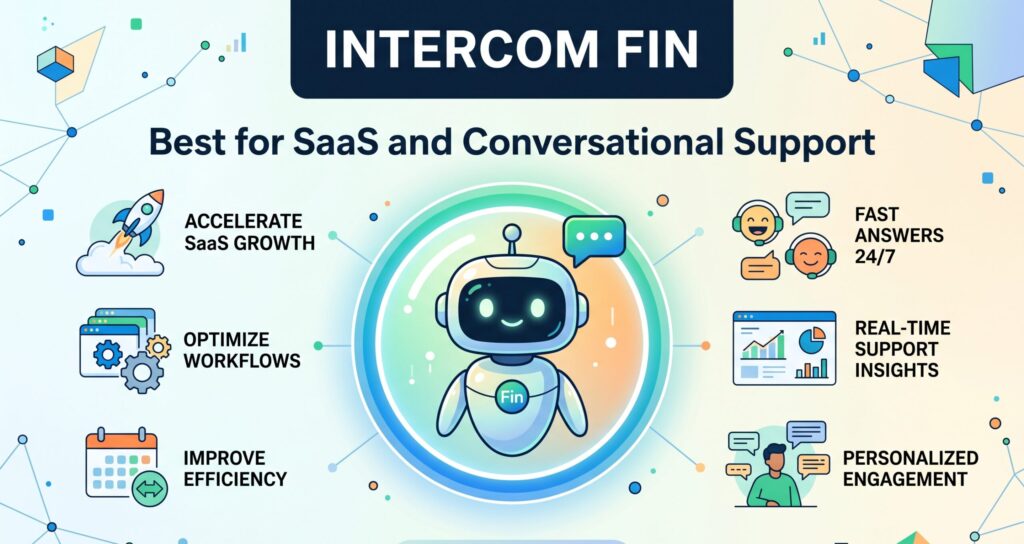
1. Intercom Fin (Best for SaaS and Conversational Support)
Intercom’s Fin AI agent stands out for product-led companies and teams that want natural, helpful chats. It works inside your product or website and handles conversations end-to-end when possible.
Key strengths:
- Strong at understanding context and resolving questions autonomously (many teams see 50-70%+ resolution).
- Proactive messaging for onboarding or alerts.
- Smooth handoff to human agents with full context.
- Good knowledge base integration.
Best for: SaaS businesses, apps, and teams focused on in-app or website support.
Drawbacks: Can get pricey with resolution-based fees. Best if you’re already in the Intercom ecosystem or willing to use it.
2. Zendesk AI (Best for Established Helpdesk Teams)
Zendesk remains a go-to for companies that already use its ticketing system. Its AI agents handle automation, routing, and generative replies while tying everything back to tickets.
Key strengths:
- Deep integration with Zendesk workflows.
- AI for triage, suggestions, and some autonomous resolutions.
- Multilingual support and strong analytics.
- Scales well for larger operations.
Best for: Enterprises or mid-market teams already on Zendesk who want to add AI without switching platforms.
Drawbacks: Pricing gets complex with add-ons. Some features feel layered on rather than native.
Pricing overview: Suite plans start around $55–$169 per agent/month (annual). AI resolutions often have additional per-resolution or add-on costs (e.g., $1.50+ committed).
3. Ada (Best for High-Volume Enterprise Automation)
Ada focuses on serious automation for big companies. It shines when you need an AI that follows detailed processes and takes real actions across systems.
Key strengths:
- High deflection rates in well-tuned setups (often 60-80%+ for suitable queries).
- Strong workflow and integration capabilities.
- Good for complex, multi-step support like account management or troubleshooting.
Best for: Large brands with high chat volumes, especially in e-commerce, telecom, or finance.
Drawbacks: Implementation takes more effort and governance. Some customer feedback mentions frustration with loops if not managed well. Pricing is enterprise (custom, often higher).
4. Freshchat by Freshworks (Best Omnichannel Option)
Freshchat makes it easy to manage conversations across many channels from one place. Its AI helps automate replies and workflows without heavy coding.
Key strengths:
- True omnichannel (web, mobile, social, WhatsApp, etc.).
- No-code flows and agent co-pilot features.
- Affordable for growing teams.
- Solid knowledge grounding.
Best for: Digital-first businesses, mid-market teams, and companies needing broad channel coverage.
Drawbacks: May not match the deepest enterprise automation of specialized tools.
Pricing: Tiered plans; generally competitive for SMB to mid-market.
5. Tidio (Best for Small Businesses and E-commerce)
Tidio keeps things simple and effective for smaller teams. It combines live chat, automation, and AI in an easy-to-use package.
Key strengths:
- Quick setup with templates.
- E-commerce integrations (Shopify, etc.).
- Visitor tracking and behavior-based automation.
- Affordable with a good live chat + bot combo.
Drawbacks: Less powerful for very complex enterprise needs or massive scale.
Pricing: Freemium model with paid tiers for more features.
Quick Comparison Table
| Chatbot | Best For | Resolution Potential | Key Strength | Main Drawback | Pricing Style |
| Intercom Fin | SaaS, in-app support | High (50-70%+) | Natural conversations | Cost with volume | Per resolution + base |
| Zendesk AI | Existing Zendesk users | Medium-High | Ticketing integration | Complex add-on pricing | Per agent + resolutions |
| Ada | High-volume enterprises | Very High (tuned) | Workflow automation | Setup effort & cost | Enterprise custom |
| Freshchat | Omnichannel mid-market | Medium-High | Multi-channel ease | Depth vs specialists | Tiered plans |
| Tidio | Small biz & e-commerce | Good for simple | Easy & affordable | Scale limits | Freemium + paid |
What Competitors Often Miss: Key Gaps Filled Here
Many reviews list tools but skip the practical side. Here’s what actually decides success in 2026:
- Implementation reality: Start small with the top 5-10 intents. Keep your knowledge base clean and up to date. Test handoffs thoroughly.
- Avoiding hallucinations: Choose tools with strong “grounding” (answers pulled only from your approved content) and confidence thresholds for escalation.
- Measurements that matter: containment rate, CSAT (bot vs. human), resolution time, and cost per contact. Aim for 30-70% deflection depending on your industry.
- Multilingual and global needs: Most top tools handle multiple languages well, but test with your specific audience.
- Security & compliance: Look for SOC 2, GDPR, data residency options critical for worldwide use.
Actionable tips for choosing and launching:
- Audit your current ticket volume and common questions.
- Prioritize native integrations with your CRM/helpdesk.
- Pilot on one channel first.
- Plan for ongoing optimization review analytics weekly and update content.
- Train your team on collaboration with the bot, not replacement.
Conclusion
The “best” AI chatbot depends on your size, current tools, and goals. Intercom Fin leads for conversational quality, Zendesk for familiar workflows, Ada for heavy automation, Freshchat for channels, and Tidio for simplicity and cost.
Start by matching your needs to one of these, request demos, and run a small pilot. The right choice pays for itself quickly through saved time and happier customers. In 2026, AI isn’t replacing support teams it’s making them far more effective.
FAQs
Will an AI chatbot replace my support agents?
No. Good setups handle repetitive work so agents focus on complex, high-value issues. Most teams end up with higher productivity and better jobs.
How much can I realistically save?
Many companies see 30-60% deflection on suitable queries, cutting costs significantly while improving speed. Results depend on setup quality.
How long does setup take?
Simple tools like Tidio: days to weeks. Enterprise options like Ada or deep Zendesk: weeks to months with proper planning.
What if the bot gives a wrong answer?
Choose grounded tools, set low-confidence escalations, monitor analytics, and maintain your knowledge base. Human oversight is still key.
Can these work worldwide with different languages?
Yes top options support multiple languages well. Test accuracy with your specific customer base and content.
Ready to pick one? Evaluate based on your stack, volume, and growth plans. The tools above represent the strongest performers right now for businesses around the world.
