



Unleash Your Brand’s Potential With Custom Handle Boxes
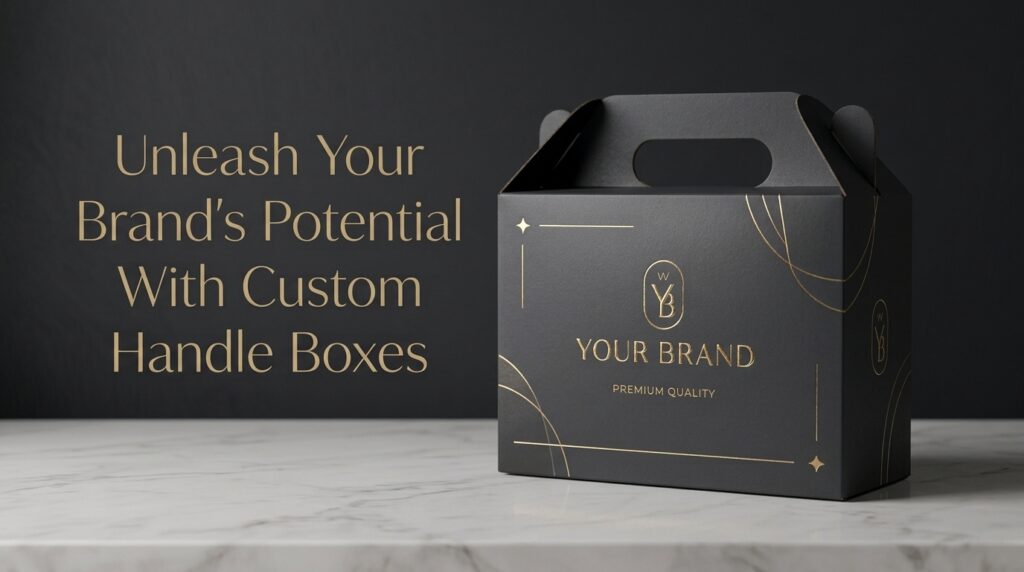
Picture this. A customer opens their front door, sees a box with a neat little handle on top, and smiles before they even open it. That small moment matters. It tells them your brand cares about details.
Custom handle boxes do exactly that. They are not just boxes. They are a small, smart tool that helps your brand look better, feel more trustworthy, and stand out on a shelf or a doorstep.
In this guide, you will learn what custom handle boxes are, why brands use them, what they cost, which materials work best, and how to order the right ones for your business. No confusing words. No fluff. Just clear, honest answers.
What Are Custom Handle Boxes?
A custom handle box is a box with a built-in handle on top, made and printed to match your brand. From the top, it looks a bit like a bag. From the bottom, it looks like a sturdy box. That mix is what makes it special.
You will see these boxes used for:
- Gift packaging
- Bakery and food takeout
- Cosmetics and skincare sets
- Wedding favors
- Retail products
- Subscription boxes
- Corporate gifts
The handle makes the box easy to carry. The custom design makes it easy to remember. That combination is why so many brands choose custom handle boxes over plain packaging.
Why Custom Handle Boxes Matter For Your Brand
Packaging is often the first thing a customer touches. Before they see your product, they see your box. If that box looks cheap or boring, it can hurt how people feel about what is inside, even if the product is great.
Here is what a well-designed handle box does for your brand:
- Grabs attention on a shelf or in a photo
- Builds trust, since good packaging signals a serious business
- Makes carrying easy, so customers do not struggle with bags or loose items
- Turns unboxing into an experience, which people love to share online
- Keeps your brand in memory, since a unique box is harder to forget than a plain one
Small businesses often compete with big brands that have huge marketing budgets. A smart, well-made handle box helps level that playing field. It gives your product a premium feel without a premium price tag. If your business is also scaling other parts of its online storefront, our roundup of ecommerce tools for growing stores pairs well with packaging decisions like this one.
Materials Used In Custom Handle Boxes
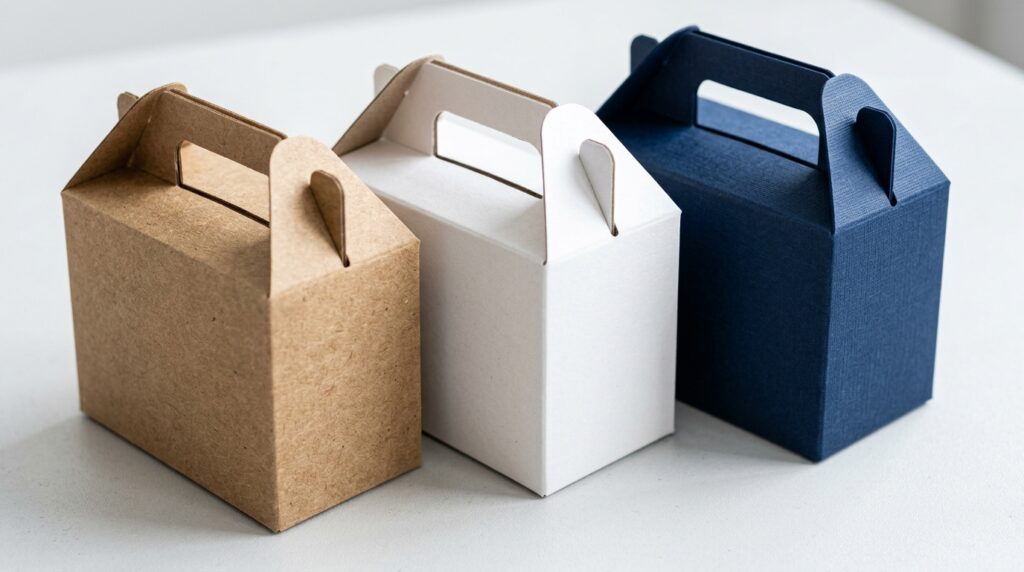
Not all handle boxes are made the same way. The material you choose changes how the box looks, feels, and holds up. Here are the most common options.
Kraft Paper
Kraft is a brown, natural-looking paper. It is strong, affordable, and fully recyclable. Brands that want an eco-friendly, earthy look often pick Kraft. Kraft paper’s manufacturing process traces back to a pulping method that produces unusually strong, tear-resistant fibers, which is part of why it holds up so well in packaging.
Cardboard
Cardboard is thicker and sturdier than regular paper. It protects products well during shipping and handling. This is the most popular choice for food and retail handle boxes.
Corrugated Board
The corrugated board has a wavy layer inside for extra strength. It is used when the product is heavier or needs more protection, like glass items or electronics.
Cardstock
Cardstock is lightweight but still strong enough to hold its shape. It is a good budget-friendly option for smaller, lighter products like jewelry or small gifts.
Rigid Board
Rigid boxes feel like a luxury product on their own. They are thicker, heavier, and give a high-end feel. Brands selling premium items, like perfume or watches, often choose this.
Quick tip: If you are not sure which material fits your product, ask your packaging supplier for a sample pack. Feeling the material in your hand tells you more than any photo can.
Custom Handle Box Sizes: How To Get It Right
Size mistakes are one of the most common packaging problems. A box that is too big wastes material and money. A box that is too small damages your product.
Here is a simple way to think about sizing:
- Measure your product first. Length, width, and height, in that order.
- Add a little extra room for padding or inserts, usually half an inch to one inch.
- Check internal vs external size. Internal size is the space inside for your product. External size is what shipping companies use to calculate cost.
- Think about stacking. If boxes will be stacked in storage or shipping, make sure the shape supports that.
Getting the size right keeps your shipping costs lower and protects your product better. A snug fit also looks neater when the customer opens the box. And if you’re storing pallets of packaging inventory yourself, keeping that space properly maintained matters too. Even something like a stockroom leak can quietly ruin a batch of boxes, so it’s worth reading how quickly you should act on a ceiling water leak before it spreads to stored inventory.
How Much Do Custom Handle Boxes Cost?
This is one of the most searched questions, so let’s answer it clearly.
Prices depend on four main things:
- Box size – bigger boxes use more material, so they cost more
- Material type – Kraft and cardstock are cheaper, rigid board costs more
- Printing style – simple one-color printing is cheaper than full-color designs with foiling
- Order quantity – buying more boxes lowers the price per box
As a general guide, custom printed boxes typically cost somewhere between $0.35 and $5 per box for most standard runs, with premium rigid boxes going higher. Small orders of around 15 to 50 boxes often cost more per unit than bulk orders of 500 or more.
If you want an exact price, ask a packaging supplier for a quote based on your exact size, material, and design. Most suppliers give free quotes within a day or two.
Printing And Finishing Options
Once you pick a material and size, the next step is design. This is where your brand really comes to life.
Printing Methods
- Digital printing – best for small orders and quick turnaround
- Offset printing – best for large orders, gives sharp, consistent color
- CMYK printing – standard full-color printing for detailed designs
- Pantone (PMS) printing – used when you need an exact brand color every single time
- UV printing – adds shine and durability to specific spots on the box
If exact, repeatable brand color matters to you, it’s worth understanding how the Pantone Matching System actually standardizes color across different printers and materials, since that’s the whole reason PMS printing exists.
Finishing Touches
- Matte finish – soft, non-shiny look, feels modern and calm
- Gloss finish – shiny, bright, and eye-catching
- Spot UV – shiny highlights on specific parts of the design, like a logo
- Foil stamping – gold or silver accents for a luxury look
- Embossing – raised texture that customers can feel, not just see
- Window cutouts – a clear panel so customers can see the product inside
You do not need every option. Pick two or three that match your brand’s personality. A skincare brand might choose matte finish with soft colors. A gift shop might choose gloss with gold foiling.

How To Order Custom Handle Boxes: Step By Step
Ordering packaging can feel confusing the first time. Here is the simple version.
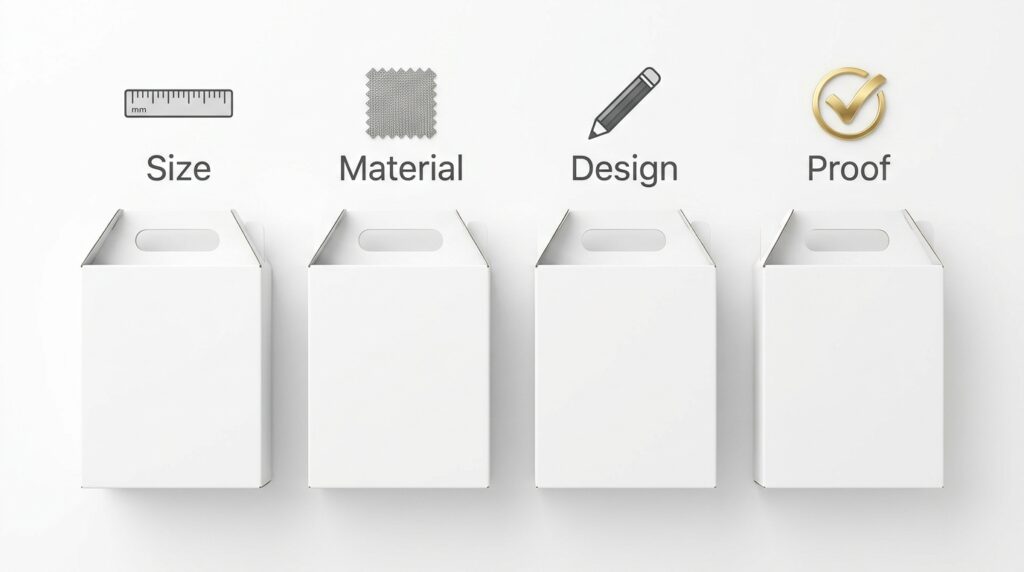
- Decide your box style and size based on your product.
- Choose your material based on budget and how much protection you need.
- Send your design or logo to the packaging company, or ask their design team for help.
- Review a digital proof before anything is printed, to catch mistakes early.
- Request a physical sample, if possible, to check the feel and color in real life.
- Approve and place your bulk order.
- Track production and shipping until your boxes arrive.
Most suppliers take about 7 to 12 working days for production, plus shipping time. If you need boxes for a launch date, order at least three to four weeks ahead to be safe. If several people on your team are coordinating suppliers, proofs, and deadlines remotely, our tips on managing a growing remote team can help keep that process from slipping through the cracks.
Custom Handle Boxes For Different Industries
Different businesses use these boxes in different ways. Here are real examples.
Bakeries use handle boxes for cakes and pastries, since the handle makes carrying warm food safer and easier. Cosmetic brands use them for skincare sets, often adding a window so customers can see the products. Wedding planners use small handle boxes as elegant favor packaging for guests. Retail clothing stores use sturdy handle boxes instead of plastic bags for a more premium shopping experience. Corporate gifting companies use rigid handle boxes to send client gifts that feel high-end. Medical and equipment suppliers use strong corrugated handle boxes to protect delicate gear during transport.
If your product needs to be carried, gifted, or unboxed with a bit of ceremony, a handle box almost always fits.
Content Gap: Sustainability And Eco-Friendly Packaging
Many articles on this topic mention “eco-friendly” without explaining what that actually means. Here is the real picture.
- Recyclable materials like Kraft paper and plain cardboard can go straight into standard recycling bins, and the EPA’s recycling guidance is a reliable reference if you want to confirm what actually counts as recyclable in most municipal systems.
- Biodegradable materials break down naturally over time instead of sitting in a landfill for years.
- Soy-based inks are a greener printing choice compared to standard petroleum-based inks.
- Avoid mixed materials like plastic-coated cardboard, since these are much harder to recycle.
If you want packaging that carries genuine, verifiable sustainability credentials rather than just a green-sounding label, look into whether your supplier’s paper is FSC-certified, which confirms the material comes from responsibly managed forests. If sustainability matters to your customers, say so on the box. A simple line like “Made from 100% recyclable Kraft paper” builds trust and can influence buying decisions, especially with younger shoppers who actively look for eco-friendly brands.
Content Gap: Common Mistakes Brands Make With Handle Boxes
Competitor articles rarely mention what can go wrong. Here are mistakes to avoid.
- Choosing size before checking the product fit. Always measure the product first.
- Skipping the sample stage. Colors on a screen often look different in real life.
- Overloading the design. Too many colors, fonts, or images can make the box look cluttered instead of premium.
- Ignoring handle strength. A weak handle can tear under weight, which looks bad and can damage the product.
- Not checking minimum order quantities (MOQ). Some suppliers require large minimum orders, which may not suit small businesses.
- Forgetting shipping dimensions. A box that looks fine in design software can end up too bulky or awkward once packed with padding.
Avoiding these small mistakes saves money and protects your brand image.
Content Gap: Custom Handle Boxes vs Other Packaging Types
People often compare handle boxes to other packaging styles before deciding. Here is a quick, honest comparison.
| Packaging Type | Best For | Downside |
| Custom Handle Boxes | Gifts, retail, food takeout, easy carrying | Slightly higher cost than plain boxes |
| Plain Shipping Boxes | Bulk shipping, storage | No branding, no visual appeal |
| Mailer Boxes | E commerce shipping | No built in handle, harder to carry |
| Rigid Gift Boxes | Luxury products | Higher cost, heavier material |
| Paper Bags | Quick retail purchases | Less durable, less protective |
Handle boxes sit in a strong middle spot. They protect the product like a box but carry it like a bag. That balance is exactly why so many brands prefer them.
Actionable Tips To Get The Best Custom Handle Boxes
- Start with your product’s exact measurements before choosing a size.
- Pick a material that matches your product’s weight and value.
- Keep your design simple, clean, and true to your brand colors.
- Always request a sample before a bulk order.
- Ask about turnaround time early, especially before big sales seasons.
- Compare at least two or three suppliers before committing.
- Add a short sustainability note if your materials are recyclable.
If your packaging operation is also spread across a physical storefront or studio, it’s worth keeping an eye on the building itself too, since safety and compliance issues like an outdated electrical setup can disrupt production. Our guide on why an EICR certificate matters for property safety covers this in more depth, and if your storefront or ordering system also runs on a web app, our piece on whether Angular is still worth using for web apps in 2026 is a useful read for the tech side of running a growing brand.
Conclusion
Custom handle boxes are a simple way to make a big impression. They protect your product, make it easy to carry, and give your brand a professional, memorable look. Whether you run a bakery, a skincare line, or a gift shop, the right handle box can turn an ordinary delivery into a moment your customer remembers.
Choosing the right size, material, and finish takes a little planning, but it pays off every time a customer opens that box with a smile. If you want your brand to unleash its full potential, custom handle boxes are one of the easiest upgrades you can make today.
FAQs
What are custom handle boxes used for?
They are used to package and carry products like gifts, bakery items, cosmetics, and retail goods. The handle makes them easy to carry, and the custom design shows off your brand.
What material is best for custom handle boxes?
Kraft paper and cardboard are the most popular choices. Kraft is eco-friendly and affordable, while cardboard offers more strength for heavier products. Rigid board is best for luxury items.
How much do custom handle boxes cost?
Most custom handle boxes cost between $0.35 and $5 per box, depending on size, material, printing, and order quantity. Larger orders lower the price per box.
Are custom handle boxes eco-friendly?
Yes, if made from Kraft paper, plain cardboard, or recycled materials. Avoid plastic-coated options if sustainability is a priority for your brand.
How long does it take to get custom handle boxes made?
Production usually takes 7 to 12 working days, plus shipping time. Order a few weeks ahead of big launches or sales events to avoid delays.
Can I get a sample before placing a bulk order?
Yes, most suppliers offer sample boxes so you can check the material, print quality, and color before committing to a large order.
What size should my handle box be?
Measure your product’s length, width, and height first, then add a small buffer for padding. The box should fit snugly without being too tight or too loose.
Is there a minimum order quantity for custom handle boxes?
It depends on the supplier. Some allow orders as low as 25 to 100 boxes, while others require larger minimums. Always check before ordering.
